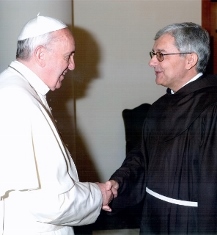
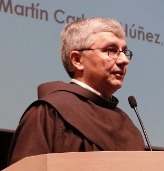
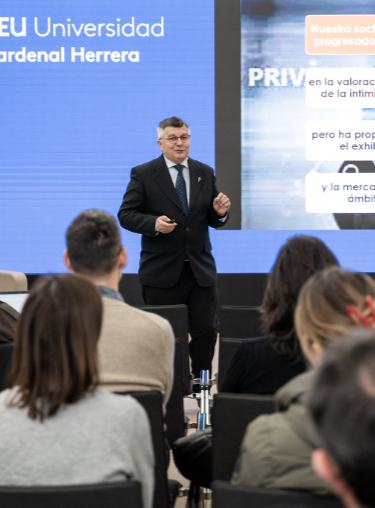
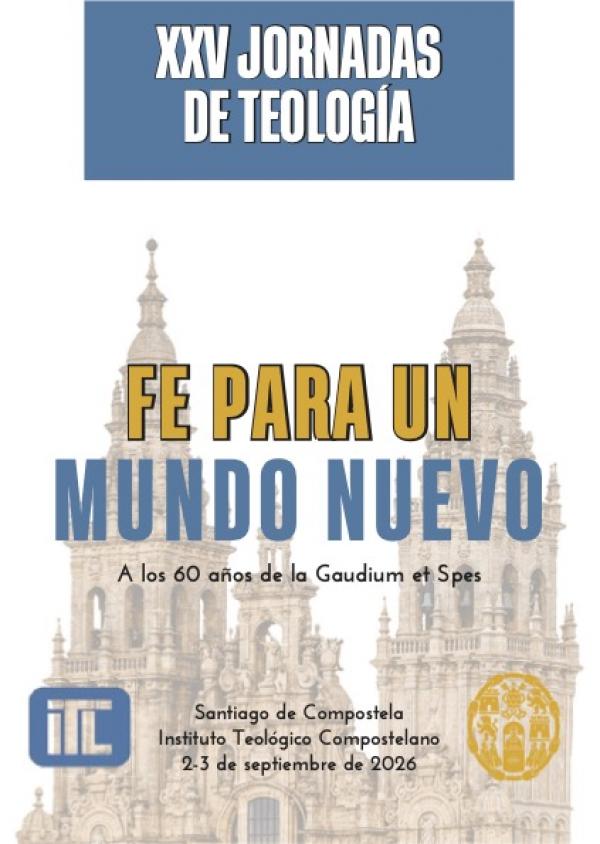
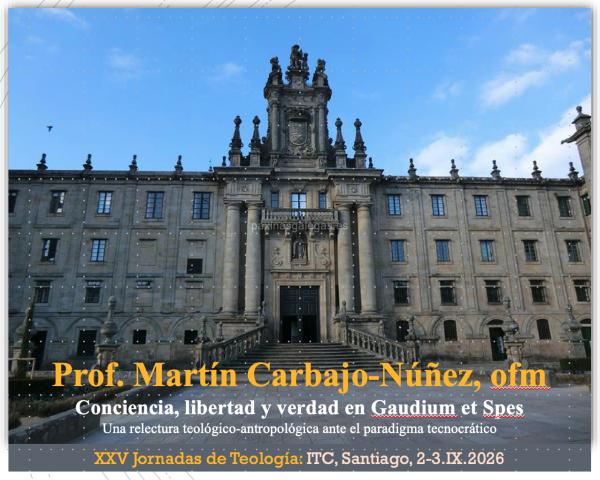
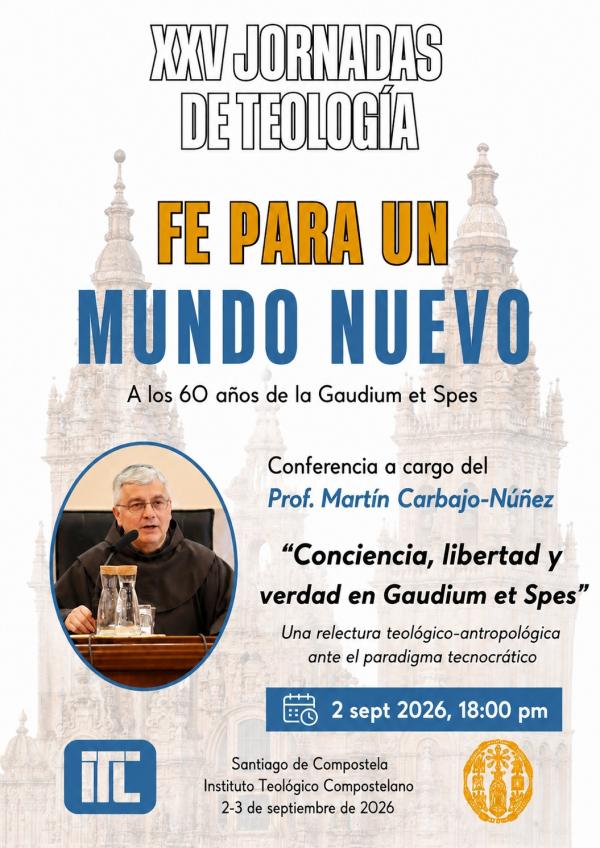
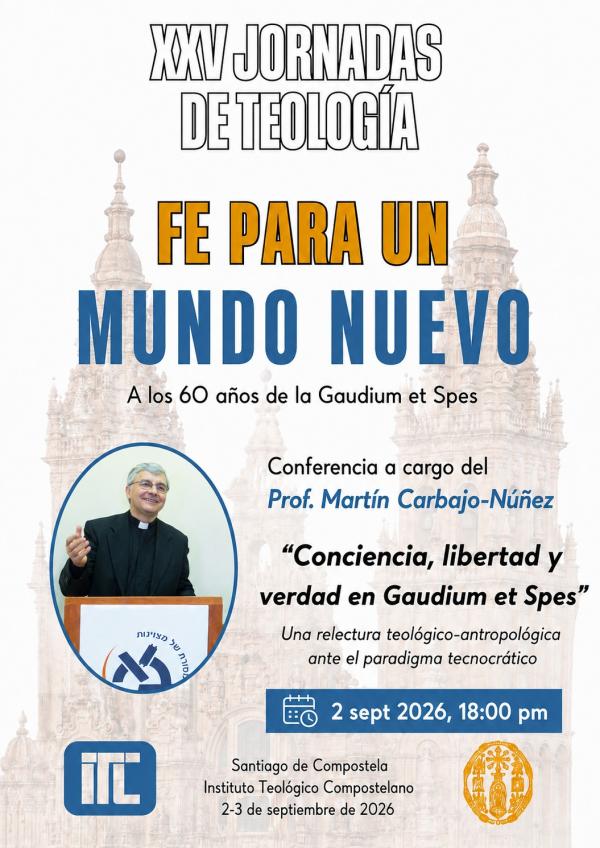
Professor Martín Carbajo-Núñez, OFM, will participate as a keynote speaker at the 25th Theology Conference organized by the Instituto Teológico Compostelano (ITC), an institution affiliated with the Universidad Pontificia de Salamanca. The academic event will take place on September 2–3, 2026, and will be dedicated to the Pastoral Constitution Gaudium et Spes of the Second Vatican Council on the Church in the modern world, marking the sixtieth anniversary of its promulgation.
Professor Carbajo maintains a special connection with the Instituto Teológico Compostelano, where he completed his Bachelor’s degree in Theology before moving to Rome to pursue his Licentiate and Doctorate studies. His lecture will be entitled: “Conscience, Freedom, and Truth in Gaudium et Spes: A Theological-Anthropological Reinterpretation in Light of the Technocratic Paradigm.” In his presentation, Professor Carbajo will offer a rereading of the categories of conscience, freedom, and truth in the conciliar pastoral constitution, highlighting their relevance in the face of the anthropological challenge posed by the contemporary technocratic paradigm.
According to the speaker, artificial intelligence represents one of the most advanced expressions of this paradigm and of the instrumental rationality characteristic of late modernity. Its capacity for massive data processing, machine learning, and behavioral prediction is transforming the way human beings make decisions, affecting fundamental dimensions of moral and social life. In this context, technology—initially conceived as an instrument at the service of the person—tends progressively to shape a cultural horizon that redefines the very meaning of what it is to be human.
The reflection will raise decisive questions about the role of the human subject in the technological age, especially when automated systems assume functions traditionally associated with conscience and freedom. It will also address the challenge of overcoming the reductive conceptions of truth and wisdom implicit in the dominant algorithmic logic.
From this perspective, Professor Carbajo emphasizes that the theological anthropology developed in Gaudium et Spes, centered on the dignity of the human person and on the person’s constitutive openness to truth, offers a particularly fruitful conceptual framework for addressing the ethical and anthropological challenges of the contemporary world.
On September 16, 2014, on the occasion of the
15th Theology Conference organized by the ITC, Professor Carbajo delivered a lecture entitled: “From Saint Francis of Assisi to Pope Francis: The Joy of Walking Together.”