 Carbajo-Núñez Martín ,
Time and space in the digital age, (6.03.2026), (41),
in
Blog Accademia Alfonsiana, 41-EN (2026) p. 2
.
Carbajo-Núñez Martín ,
Time and space in the digital age, (6.03.2026), (41),
in
Blog Accademia Alfonsiana, 41-EN (2026) p. 2
.
The digital environment alters «the notion of time and space» (Christus vivit 86). Many people today live their identity in a fragmented way, without a guiding thread that gives coherence to their personal development. Unity, continuity, and a meaningful path are often lacking.
Digital platforms use mechanisms designed to capture and retain attention at the expense of deep reflection. «The speed with which information is communicated exceeds our capacity for reflection and judgement, and this does not make for more balanced and proper forms of self-expression» (WCD 2014).
We easily become absorbed, “entangled” in an endless series of links and stimuli that push us to move rapidly from one place and moment to another, without a clear purpose or meaningful direction. Everything seems interesting—an eternal present that we are unable to integrate with a precise goal or a defined purpose.
1. Non-places and the perception of space
Marc Augé argues that we live in a culture of excess, which he calls “overmodernity,” characterized by acceleration and an overabundance of stimuli. This fosters the emergence of non-places, where human interaction is replaced by screens, machines, and automated systems. Only the frenetic present matters. In such spaces, anonymous individuals rush about without truly encountering one another: physically present, yet emotionally absent. They prefer these non-places to traditional spaces (home, church, family), but they do not truly inhabit them (Augé 1994, 41).
The Internet is also absorbing traditional physical places such as community, parish, and family. “See you on Facebook,” we say, while physically remaining isolated in our small private spaces. In this way, «a new type of contrived emotion which has more to do with devices and displays than with other people and with nature» (Laudato si’ 47).
2. Non-things
Byung-Chul Han argues that digitalization and technology have replaced what is tangible and enduring (“things”) with what is immaterial, ephemeral, and abstract (“non-things”), thus putting our relationship with the world and with ourselves into crisis.
Physical things make a sensory connection with reality possible and help us experience it in a meaningful way. By contrast, “non-things” hinder reflection and rootedness, fostering alienation, superficiality, and disconnection from reality.
“Non-things” consist of data, flows of information, algorithms, and virtual processes. They are not tied to a specific time or physical place, which weakens our perception of the here and now. We live in an eternal present, fragmented and without orientation.
Everything is reduced to mere information that is quickly replaced by the next stream of data. Rather than contemplating, we seek to photograph, in order to share rapidly and forget just as quickly. Today’s digital photographs—self-referential and endlessly modifiable—have lost the personal dimension of shared experience, history, and nostalgia that characterized old analog photos. They no longer express who a person truly is, but only where that person is and what he or she wishes to appear to be.
Everything passes through the individual, yet nothing profound is said about him or her. Instead of serene, reflective, and authentic experiences, we settle for the fleeting beauty of a virtual simulation or the immediacy of a “selfie.”
Conclusion
The analysis we have undertaken indicates that it is urgent to recover the value of memory and history in order to give context and depth to our experiences, since «we do not progress without an honest and unclouded memory» (Fratelli tutti 249). As Søren Kierkegaard affirms, «life can only be understood backwards, but it must be lived forwards» (Kierkegaard 2023).
Martín Carbajo-Núñez, OFM
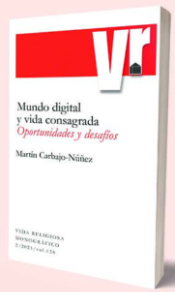
[1] These paragraphs are taken from the publication: Carbajo-Núñez Martín, «Mundo digital y Vida consagrada: oportunidades y desafios,» en " Vida Religiosa", Monográfico, Madrid, 2/138 (2025), pp. 118.
|